I keep on telling people that just because you have an MD, doesn't mean that your smart. I'm starting to think that any MD who went to Harvard is especially stupid. Here's an idiot neurosurgeon who I wouldn't want getting close to my brain. He was unconscious for a while, then months later made up a silly story about white clouds and magical people (that somehow seemed to exactly fit the fairy tale stories of Heaven you hear as a child). He’s a neurosurgeon, not a neuroscientist. He’s good at memorizing
things to pass a test and maybe how to use a scalpel. He knows very
little about brain networks, cellular and molecular neuroscience of hypoxic injury, etc. and he doesn't know that the brain does all types of crazy things when it is injured, and it can easily make people think they are in a magical place or "heaven". I despise doctors who think that an MD automatically makes them a scientist. He says, "I'm still a doctor, and still a man of science every bit as much as I was before I had my experience." No, sir. You are completely abandoning science. You aren't even attempting to approach your experience (if you ever did have it) from a scientific point of view.
Actually, I take it back. This guy is smart. He's making it all up and pimping his neurosurgeon and Harvard Med credentials to sell a book. There's more money in fleecing the idiots than being honest or scientific.
Tuesday, October 9, 2012

Wednesday, August 15, 2012
Radioverwhelming
Wow. Already 6 weeks into being a radiology resident and my head is still spinning. I knew I'd have to start over again, but when you suddenly realize how much you don't know, it's incredibly humbling (and frustrating when you are actually suppose to be a productive physician and other physicians ask for your advice). Learning pretty much every medical and surgical condition about every part of the body is suppose to be hard. That's why radiology takes 4 years. I was prepared for that. What didn't hit me until now was how hard it is to know where to begin when you don't know anything. It translates to stumbling through studies with the attending correcting essentially everything you say, then going home and highlighting everything you reading. The first few weeks were actually pretty terrible. But, like everything, you start to pick things up without even knowing it. I've already had one rotation and by the end of it, it seemed much more manageable (I still don't know much, though).
Am I glad I chose it? Yes, but I could see how lots of people would hate being a radiologist. Unlike internal medicine, you really don't have much of a downtime. I thought I'd be taking coffee breaks all the time, but the studies don't stop coming. You sit (or have the option to stand) in one place for a long time looking at the same few computer screens. You rarely actually see or talk to patients. I'm fine with all those (though I would appreciate more breaks). What makes up for it, though, is that it you really become an expert. Even after 6 weeks, I have physicians with years of experience calling me for advice, which, incredibly, I can actually provide for them. Learning to pick up pathology (and normal variants) on imaging is actually fun (even though it is incredibly overwhelming). Once you see something, it sticks (way easier than memorizing books).
I've heard it gets less overwhelming after the first year. That means 10 1/2 more months of feeling lost (but I have a feeling it might be longer).
Am I glad I chose it? Yes, but I could see how lots of people would hate being a radiologist. Unlike internal medicine, you really don't have much of a downtime. I thought I'd be taking coffee breaks all the time, but the studies don't stop coming. You sit (or have the option to stand) in one place for a long time looking at the same few computer screens. You rarely actually see or talk to patients. I'm fine with all those (though I would appreciate more breaks). What makes up for it, though, is that it you really become an expert. Even after 6 weeks, I have physicians with years of experience calling me for advice, which, incredibly, I can actually provide for them. Learning to pick up pathology (and normal variants) on imaging is actually fun (even though it is incredibly overwhelming). Once you see something, it sticks (way easier than memorizing books).
I've heard it gets less overwhelming after the first year. That means 10 1/2 more months of feeling lost (but I have a feeling it might be longer).
Tuesday, July 3, 2012
Social Science Research: Not very scientific
Wednesday, June 27, 2012
Lighting up for God
Time to add another company to the list. This time, Voss Lighting Company of Lincoln, NE for denying someone a position because of not being Christian enough (and employment interview includes questions about church attendance, when the applicant was "saved" and job requires unpaid attendance to Bible study). More details here.
Tuesday, June 12, 2012
Danger of medical imaging
There is an article on MSNBC about the increase in imaging in the last 15 years. The general idea of the article is great, though not very surprising or novel. A basic summary is that the number of imaging studies have increased, they cost a lot, there is a risk of incidental findings and CT's have a risk of radiation. Unfortunately, as with most pieces of medical journalism, there's a lot that is left out, it's filled with errors and the word choice tries to get the most shock value.
Here's the title: "MRI, CT scan use spikes, study finds. Should we be worried?" It is true that there are more scans being performed today than ever before, but it has been a gradual increase with the spread of imaging technology throughout the country over the last few decades. That's hardly a "spike." Then, of course, there's the meaningless "Should we be worried?" The proper place for "Should we be worried?" in a title is for a threat that you can't do much about (i.e. "Rat shit found in drinking water. Should we be worried?"). No one is forced to get scans and, although there are a lot of unnecessary scans performed, it is not something that the public needs to start stocking up food rations for. A proper question would be "Should doctors change?"
The article goes on to talk about magnetic "resource" imaging and PET scans that use MRIs. Both incorrect and a sign of how sloppy this article is. Then, he talks about cost, false positives and this:
Overall, MSNBC and Dr. Robert Bazell wasted an opportunity to present the problem of overuse of medical imaging to a biased, mistake-filled useless article that tries to scare people away from all types of imaging.
Here's the title: "MRI, CT scan use spikes, study finds. Should we be worried?" It is true that there are more scans being performed today than ever before, but it has been a gradual increase with the spread of imaging technology throughout the country over the last few decades. That's hardly a "spike." Then, of course, there's the meaningless "Should we be worried?" The proper place for "Should we be worried?" in a title is for a threat that you can't do much about (i.e. "Rat shit found in drinking water. Should we be worried?"). No one is forced to get scans and, although there are a lot of unnecessary scans performed, it is not something that the public needs to start stocking up food rations for. A proper question would be "Should doctors change?"
The article goes on to talk about magnetic "resource" imaging and PET scans that use MRIs. Both incorrect and a sign of how sloppy this article is. Then, he talks about cost, false positives and this:
The biggest danger of all with scanning comes from CT, or computed tomography. A CT scan exposes the patient to huge amounts of X-rays. One CT scan of the chest, for example, zaps a patient with the same amount of radiation as 150 old-fashioned X-rays. In their survey of medical records, the authors of the latest study found that 3.9 percent of patients were receiving an exposure or more than 50 millisieverts every year. In comparison, that is about the equivalent of the one-time amount that the Japanese government estimates that the nearby residents of the Fukushima power plant got in the hours before they evacuated.Yes, CT scans have a large amount of radiation. But, it's disingenuous to pick one of the higher radiation forms CT. High-resolution CT scans looking for specific types of lung disease have the same radiation of "150 old-fashioned X-rays," but most common chest CT's have less than half of that. There are new low-dose CT scans that have less than a tenth of that. I'm not saying that even those low levels are completely safe, but it's not right to make something seem worse than in actually is. What's worse is comparing the amount of radiation exposed to patients over the span of a year, to the high-dose, one-time exposure that the Japanese living near Fukushima got. It makes no sense. Over our lifetimes, cumulatively, we get exposed to an enormous amount of radiation from just normal background sources. That doesn't mean that our daily exposure to cosmic rays is the same as being in an nuclear war zone.
Overall, MSNBC and Dr. Robert Bazell wasted an opportunity to present the problem of overuse of medical imaging to a biased, mistake-filled useless article that tries to scare people away from all types of imaging.
Monday, June 11, 2012
Reflections on intern year
... or was it worth it?
When it comes to intern years, I had a pretty benign one. Nonetheless, I learned a lot. The difference between a year ago and now is mostly a great build-up of confidence. Rather than freaking out with every small aspect of caring for a patient, I feel pretty comfortable with most cases, even some very serious ones. Yes, there is a lot of book knowledge and practical knowledge that I've built over the years and I certainly do feel more like a doctor. I've also had a lot of fun and made some good friends. However, was it worth it for me? Will I be a better radiologist after having gone through intern year. It's hard to tell now. Most radiologists I've asked remember almost nothing from their intern year and say that it is a waste of a year. Most internists I talk to say that the experience I've had in various fields on inpatient (and outpatient) medicine will make me a more effective radiologist. They say that I'll remember the patient's I've seen and those experiences will help me come up with a better diagnosis. I think that they're both wrong. I'm sure I'll remember some of what I've experienced this year and it will likely affect how I interpret images. However, rather than being better at making the right diagnosis, what I likely gained from this year is being able to communicate with various physicians of other specialties. It's definitely useful to know what others are interested in (or worried about) when your opinion is asked. In reality, I won't be able to tell whether this year was helpful to my career until I'm well into my career. Even then, I won't know whether what I did this year is better than having a 5-year, all radiology residency. All I can say is that it was (mostly) fun and I've had amazing experiences that I will carry with me for the rest of my life. I can also say that, for at least one year, I felt like a real doctor.
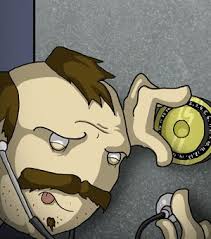
When it comes to intern years, I had a pretty benign one. Nonetheless, I learned a lot. The difference between a year ago and now is mostly a great build-up of confidence. Rather than freaking out with every small aspect of caring for a patient, I feel pretty comfortable with most cases, even some very serious ones. Yes, there is a lot of book knowledge and practical knowledge that I've built over the years and I certainly do feel more like a doctor. I've also had a lot of fun and made some good friends. However, was it worth it for me? Will I be a better radiologist after having gone through intern year. It's hard to tell now. Most radiologists I've asked remember almost nothing from their intern year and say that it is a waste of a year. Most internists I talk to say that the experience I've had in various fields on inpatient (and outpatient) medicine will make me a more effective radiologist. They say that I'll remember the patient's I've seen and those experiences will help me come up with a better diagnosis. I think that they're both wrong. I'm sure I'll remember some of what I've experienced this year and it will likely affect how I interpret images. However, rather than being better at making the right diagnosis, what I likely gained from this year is being able to communicate with various physicians of other specialties. It's definitely useful to know what others are interested in (or worried about) when your opinion is asked. In reality, I won't be able to tell whether this year was helpful to my career until I'm well into my career. Even then, I won't know whether what I did this year is better than having a 5-year, all radiology residency. All I can say is that it was (mostly) fun and I've had amazing experiences that I will carry with me for the rest of my life. I can also say that, for at least one year, I felt like a real doctor.
The only use for my stethoscope from now on (image source)
Tuesday, June 5, 2012
Guide to medical students
OK, now that I'm nearly a year out from becoming a doctor, I've gotten a chance to be on the other end of medical school for long enough to try to give some advice to those going through medical school now. I've worked with several medical students and have picked up a few things about what makes a medical student a successful member of the team.
1. Get to know your patients. You have more time than everyone else on the team. So, get to know your few patients as well as you can. First, it's an interesting experience and you'll build a great relationship with the patient. You'll gain the patient's trust and may be able to get more information from the patient than any resident or attending will. With this, you'll add to the patient's care more than any resident will. I've seen patients specifically asking to see the med student rather than the resident or attending because of the close relationship they've built.
2. Think for yourself. Come up with a plan of what you want to do right after you see the patient and before you talk it over with a resident or attending. Don't worry about being wrong. It will quickly help you figure out how different conditions are tested and treated.
3. Do your work. Don't copy the work of others. I know that med student notes are usually ignored by everyone, but it's something you need to learn to do on your own since you'll be using it for the rest of your life. I've seen several med students directly copy notes from residents... not cool and not unnoticed.
4. Don't make your teammates look bad. This includes pimping your residents, showing off about what you know or have learned or volunteering for more than what is expected of you. A medical student I worked with volunteered to give a presentation during our medicine rotation. No one asked anyone to give a presentation, but he thought he'd look eager and interested if he volunteered out of his own initiative. It backfired terribly. Even if the talk had gone well, it upset the residents because it took time out of the day and it made the other medical students look bad and feel that they need to do the same thing. Kissing ass can get you far in med school, but it can also terribly backfire, so better to not do it.
5. Ask questions. There are no stupid questions. Lots of what you have questions about, other, more senior team members probably also have questions about.
6. Don't pretend you're going into the field of whoever you're talking to. They'll see right through you.
7. There are some things you should not emulate. Interns will complain. They will bitch. They will make fun of attendings, patients, each other. They will slack off. You cannot do that. Despite all the complaining and slacking, they will get their work done. You just started, you have a lot of studying to do and can't afford to waste time like they do.
8. Don't lie. If you forgot to look something up or didn't get a chance to see a patient, don't make up numbers or a physical exam. There was a medical student who forgot to pre-round on one of his patients and just made of the physical exam (it was a surgery rotation, so he was actually pretty close to being right). He got caught when he went to the patients room and didn't realize that the patient had moved to a different part of the hospital the night before.
9. Don't be scared, upset or angry about criticisms you hear from others. Think about it. If it's justified, learn from it. Don't take it personally. Don't think it'll ruin your grade.
I'm sure there is more, but these are the ones that jumped at me with the med students I worked with in the last year.
1. Get to know your patients. You have more time than everyone else on the team. So, get to know your few patients as well as you can. First, it's an interesting experience and you'll build a great relationship with the patient. You'll gain the patient's trust and may be able to get more information from the patient than any resident or attending will. With this, you'll add to the patient's care more than any resident will. I've seen patients specifically asking to see the med student rather than the resident or attending because of the close relationship they've built.
2. Think for yourself. Come up with a plan of what you want to do right after you see the patient and before you talk it over with a resident or attending. Don't worry about being wrong. It will quickly help you figure out how different conditions are tested and treated.
3. Do your work. Don't copy the work of others. I know that med student notes are usually ignored by everyone, but it's something you need to learn to do on your own since you'll be using it for the rest of your life. I've seen several med students directly copy notes from residents... not cool and not unnoticed.
4. Don't make your teammates look bad. This includes pimping your residents, showing off about what you know or have learned or volunteering for more than what is expected of you. A medical student I worked with volunteered to give a presentation during our medicine rotation. No one asked anyone to give a presentation, but he thought he'd look eager and interested if he volunteered out of his own initiative. It backfired terribly. Even if the talk had gone well, it upset the residents because it took time out of the day and it made the other medical students look bad and feel that they need to do the same thing. Kissing ass can get you far in med school, but it can also terribly backfire, so better to not do it.
5. Ask questions. There are no stupid questions. Lots of what you have questions about, other, more senior team members probably also have questions about.
6. Don't pretend you're going into the field of whoever you're talking to. They'll see right through you.
7. There are some things you should not emulate. Interns will complain. They will bitch. They will make fun of attendings, patients, each other. They will slack off. You cannot do that. Despite all the complaining and slacking, they will get their work done. You just started, you have a lot of studying to do and can't afford to waste time like they do.
8. Don't lie. If you forgot to look something up or didn't get a chance to see a patient, don't make up numbers or a physical exam. There was a medical student who forgot to pre-round on one of his patients and just made of the physical exam (it was a surgery rotation, so he was actually pretty close to being right). He got caught when he went to the patients room and didn't realize that the patient had moved to a different part of the hospital the night before.
9. Don't be scared, upset or angry about criticisms you hear from others. Think about it. If it's justified, learn from it. Don't take it personally. Don't think it'll ruin your grade.
I'm sure there is more, but these are the ones that jumped at me with the med students I worked with in the last year.
Subscribe to:
Posts (Atom)