Showing posts with label rads. Show all posts

Wednesday, April 17, 2013

Intervening

I guess after a few months, it's time to actually talk about residency. I have finally gotten a chance to see the other side of radiology, interventional radiology (IR). Essentially, this is a specialty that is involved in image-guided procedures. More specifically, it involves variations of one technique used ad naseum: the Seldinger technique. Here it goes: stick a needle into something, stick a wire in the needle, take the needle out, stick a sheath over the wire, take the wire out and put in whatever tool you want inside the sheath to do what you need to do.
Thanks Dr. Seldinger, all I need to do is learn this (from wikipedia)
Of course, there's a little more to it than that, but if you could do that, you're halfway there. It has more of a feel of surgery than diagnostic radiology. There is the same thinking on your feet excitement that I gathered from surgery. The difference is that you're using ultrasound, x-rays, CTs and MRIs and that often, the patients go home (almost) immediately after a major procedure (and much less rounding on patients, getting yelled at by scrub nurses and blood).

There is a great satisfaction to seeing a patient with a problem, directly seeing the problem with your imaging technique, then with minimal invasion of the patient, fixing it and seeing the patient drive home with their problem fixed a few hours later. There is also a wide variety of cases, from simple thyroid biopsies, to draining blocked kidneys or infections, to treating tumors with microwaves, to fixing narrowing or rupture of big and small vessels. It is a great deal of fun.

What draws me away from the field, though, are two things. One is that for the more complicated vascular cases, it really sucks to be twisting a wire inside a vessel for hours trying to get into a small artery. But, what really drives me away from it is that it doesn't have the academic feel. Although you need to be able to read images, you really don't need to be great at it to see a fluid collection (who cares what it is, you'll stick a needle in it and find out soon) or a blocked vessel. The patient often already has a diagnosis or the pathologist will figure out the diagnosis, so the satisfaction of figuring something out is not there as much as it is in diagnostic radiology. Researchwise, it's more about making new devices or new techniques to accomplish a task that people are doing than trying to figure out how the body works.

It's not what I wanted to do when I signed up for radiology, but it's great to know that in a short month I've been able to pick up a lot of these techniques. Simpler (nonvascular) procedures are often also done by other types of radiologists and I would love to be able to do some procedures in whatever branch of diagnostic radiology I end up in. I'll just leave the wire twisting to the professionals.

I actually got to angioplasty a vessel a few weeks ago. The scary part is that the balloons have a "burst" pressure rating, but for some reason, no one seems to worry about going over it.

Thursday, January 3, 2013

First Year Radiology, or finding les mots justes

After 5 months, I suppose it's time for an update on first year radiology. The shock of the first few weeks have subsided (though every month, with a new modality or a new part of the body, I get hit with it again), but it is still difficult to think that I'll be a fully functioning radiologist in a mere 3 years and 7 months. I still seem to learn about several medical conditions I hadn't even heard of before once a day. It's an amazingly humbling experience. What surprised me the most on starting the radiology residency is something I'm still having trouble with. It's finding the right words to describe what I'm looking at.

Contrary to what a lot of people think. Radiology is not a big "Where's Waldo" game. It's about knowing the pattern of normal and disease, knowing what's clinically significant and what's just a normal variant, knowing what other findings go with the one that you see, knowing what findings go with the lab tests and physical exam findings that clinicians report. It turns out the describing what you see and communicating your idea of what the findings may represent is tougher than it seems.

In radiology, there is the concept of an "Aunt Minnie" (as evidenced by the popular radiology website). It refers to knowing what an abnormality is because you've seen it before. In other words, it's hard to describe what you see, but if you've seen it before, you know it can't be anything else. The trouble is that description is a large part of radiology. I should be able to convey what I see to a clinician to such a degree of accuracy that the clinician should be able to picture what I see without having the images in front of them (because this is, in fact, usually the case). This, I've found out is incredibly hard. I see what I want to describe pretty quickly, but it takes me several tries to be happy with how I've described it (then the attending changes it anyway).

In addition to finding the right words to describe something, there's conveying the clinical significance of what I see. There are hundreds of minor abnormalities or normal variants in an imaging study and we're obliged to describe them (so that someone else doesn't think that they represent a serious abnormality or doesn't spend thousands of dollars to further investigate it), but we must describe them in a manner that tells the clinician not to worry about it. For example, using words like "tiny" or "of questionable clinical significance" or "a normal variant" tells the clinician that we're not worried about it. Sometimes, it isn't that easy. Today, I saw a bone lesion that I thought was a small fragment from a vertebral fracture, but the attending I was working with was not worried about it. My dilemma was how to describe a fragment of bone near the spine of someone who is having neck pain and convey that it's not a big deal and is likely not what is causing the patients pain. It took me about six tries before I settled on something I was happy with.

The nice thing about these wording difficulties is that once I figure out something I'm happy with, I can use it for every other similar case. This is a major part of what my first year is all about.

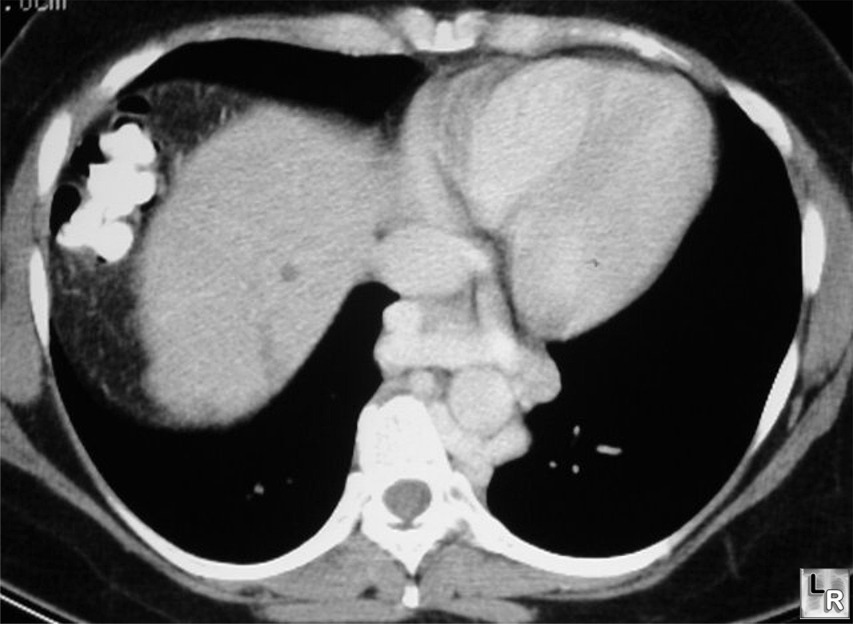
I knew these were varices, but I got reprimanded by the attending for just saying "esophageal varices are present." It turns out I should have said "paraesophageal serpigenous enhancing tubular structures likely represent varices." (image from LearningRadiology.com)

Wednesday, August 15, 2012

Radioverwhelming

Wow. Already 6 weeks into being a radiology resident and my head is still spinning. I knew I'd have to start over again, but when you suddenly realize how much you don't know, it's incredibly humbling (and frustrating when you are actually suppose to be a productive physician and other physicians ask for your advice). Learning pretty much every medical and surgical condition about every part of the body is suppose to be hard. That's why radiology takes 4 years. I was prepared for that. What didn't hit me until now was how hard it is to know where to begin when you don't know anything. It translates to stumbling through studies with the attending correcting essentially everything you say, then going home and highlighting everything you reading. The first few weeks were actually pretty terrible. But, like everything, you start to pick things up without even knowing it. I've already had one rotation and by the end of it, it seemed much more manageable (I still don't know much, though).

Am I glad I chose it? Yes, but I could see how lots of people would hate being a radiologist. Unlike internal medicine, you really don't have much of a downtime. I thought I'd be taking coffee breaks all the time, but the studies don't stop coming. You sit (or have the option to stand) in one place for a long time looking at the same few computer screens. You rarely actually see or talk to patients. I'm fine with all those (though I would appreciate more breaks). What makes up for it, though, is that it you really become an expert. Even after 6 weeks, I have physicians with years of experience calling me for advice, which, incredibly, I can actually provide for them. Learning to pick up pathology (and normal variants) on imaging is actually fun (even though it is incredibly overwhelming). Once you see something, it sticks (way easier than memorizing books).

I've heard it gets less overwhelming after the first year. That means 10 1/2 more months of feeling lost (but I have a feeling it might be longer).

Tuesday, June 12, 2012

Danger of medical imaging

  There is an article on MSNBC about the increase in imaging in the last 15 years. The general idea of the article is great, though not very surprising or novel. A basic summary is that the number of imaging studies have increased, they cost a lot, there is a risk of incidental findings and CT's have a risk of radiation. Unfortunately, as with most pieces of medical journalism, there's a lot that is left out, it's filled with errors and the word choice tries to get the most shock value.
  Here's the title: "MRI, CT scan use spikes, study finds. Should we be worried?" It is true that there are more scans being performed today than ever before, but it has been a gradual increase with the spread of imaging technology throughout the country over the last few decades. That's hardly a "spike." Then, of course, there's the meaningless "Should we be worried?" The proper place for "Should we be worried?" in a title is for a threat that you can't do much about (i.e. "Rat shit found in drinking water. Should we be worried?"). No one is forced to get scans and, although there are a lot of unnecessary scans performed, it is not something that the public needs to start stocking up food rations for. A proper question would be "Should doctors change?"
  The article goes on to talk about magnetic "resource" imaging and PET scans that use MRIs. Both incorrect and a sign of how sloppy this article is. Then, he talks about cost, false positives and this:
The biggest danger of all with scanning comes from CT, or computed tomography. A CT scan exposes the patient to huge amounts of X-rays. One CT scan of the chest, for example, zaps a patient with the same amount of radiation as 150 old-fashioned X-rays. In their survey of medical records, the authors of the latest study found that 3.9 percent of patients were receiving an exposure or more than 50 millisieverts every year. In comparison, that is about the equivalent of the one-time amount that the Japanese government estimates that the nearby residents of the Fukushima power plant got in the hours before they evacuated.
 Yes, CT scans have a large amount of radiation. But, it's disingenuous to pick one of the higher radiation forms CT. High-resolution CT scans looking for specific types of lung disease have the same radiation of "150 old-fashioned X-rays," but most common chest CT's have less than half of that. There are new low-dose CT scans that have less than a tenth of that. I'm not saying that even those low levels are completely safe, but it's not right to make something seem worse than in actually is. What's worse is comparing the amount of radiation exposed to patients over the span of a year, to the high-dose, one-time exposure that the Japanese living near Fukushima got. It makes no sense. Over our lifetimes, cumulatively, we get exposed to an enormous amount of radiation from just normal background sources. That doesn't mean that our daily exposure to cosmic rays is the same as being in an nuclear war zone.
  Overall, MSNBC and Dr. Robert Bazell wasted an opportunity to present the problem of overuse of medical imaging to a biased, mistake-filled useless article that tries to scare people away from all types of imaging.

Monday, June 11, 2012

Reflections on intern year

... or was it worth it?

When it comes to intern years, I had a pretty benign one. Nonetheless, I learned a lot. The difference between a year ago and now is mostly a great build-up of confidence. Rather than freaking out with every small aspect of caring for a patient, I feel pretty comfortable with most cases, even some very serious ones. Yes, there is a lot of book knowledge and practical knowledge that I've built over the years and I certainly do feel more like a doctor. I've also had a lot of fun and made some good friends. However, was it worth it for me? Will I be a better radiologist after having gone through intern year. It's hard to tell now. Most radiologists I've asked remember almost nothing from their intern year and say that it is a waste of a year. Most internists I talk to say that the experience I've had in various fields on inpatient (and outpatient) medicine will make me a more effective radiologist. They say that I'll remember the patient's I've seen and those experiences will help me come up with a better diagnosis. I think that they're both wrong. I'm sure I'll remember some of what I've experienced this year and it will likely affect how I interpret images. However, rather than being better at making the right diagnosis, what I likely gained from this year is being able to communicate with various physicians of other specialties. It's definitely useful to know what others are interested in (or worried about) when your opinion is asked. In reality, I won't be able to tell whether this year was helpful to my career until I'm well into my career. Even then, I won't know whether what I did this year is better than having a 5-year, all radiology residency. All I can say is that it was (mostly) fun and I've had amazing experiences that I will carry with me for the rest of my life. I can also say that, for at least one year, I felt like a real doctor.

 The only use for my stethoscope from now on (image source)

Tuesday, April 10, 2012

Dental X-rays: Not without risk

  Last year, I was at a routine dental visit when my dentist said that it's time to get an X-ray. Remembering that I had an X-ray in my last visit 6 months ago, I asked why? He said that my insurance allows a panorex scan every few years and that I am now eligible for one again. Upset that the insurance company gets to decide when I need an X-ray. I asked why I need a panorex when I just had regular X-rays last time. He said that it helps diagnosed other abnormalities not picked up on regular X-rays. When I asked what other abnormalities, he said, "Oh, lots. For example, we could find a bone tumor. We don't want to miss that." Knowing that bone tumors are pretty rare, especially in the face, I declined.
  I am glad I did. This study finds a link between dental X-rays and meningiomas (a benign, but sometime hard to treat type of brain tumor). It's a case-control study, so not the strongest type of study, but it's not surprising. X-rays are radiation. Radiation damages DNA, which can lead to cancer. X-rays as a screening test carry a risk. A pretty small risk, but a risk nonetheless. So, if X-rays are being used as a screening test in asymptomatic individuals, the disease they detect should be 1) common and 2) easier to treat if caught earlier. Breast cancer is an example of a disease that fits this descriptions, and breast X-rays (mammograms) are worth using as a screening tool. Maxillary or mandibular bone cancers are rare. Very rare. The cost and risks of X-rays do not justify their use as a screening tool. Just because the insurance company allows something, it doesn't mean that it should be used.
  Dentists are well aware of the fact that their frequent X-rays are unnecessary in the vast majority of their patients. Their patients don't know that. It's an easy way to make money and it's criminal that it is common practice. So, unless you've got symptoms, it's not worth getting frequent dental X-rays.

Wednesday, February 23, 2011

Computer overlords

Oh, no. NPR, you did it again. I've said before that journalists make terrible science reporters, but this is just bad. A computer beat two Jeopardy champions pretty easily. It was an interesting game to watch and an amazing feat of technology, but Martin Ford, a computer programmer and writer decided that winning at a game show is enough evidence to show that computers can take over medicine, emphasizing on radiology. He said, "Radiologists basically focus on looking at visual images from medical devices — things like X-rays or CAT scans, that type of thing. Now, machines are getting much better at analyzing that type of visual information."

Arrgh! Radiology is not just looking at images. It isn't even just pattern recognition. It's putting together information from a vast number of sources (patient history, previous scans, pathology, physical properties of the imaging technique, variances in image acquisition, positioning of patient, etc.) To be an effective radiologist, you can't just look at every image with the same formula (if you can, who needs a radiologist?). That's a start, but personal experience at interpreting images and intuition about what the image and patient history points to adds a lot. It's that intuition that looks more closely at an image or orders a different view that makes the diagnosis.

I don't doubt that computers will eventually able to do this, but just because one won at Jeopardy, doesn't mean that it can start replacing radiologists. In reality, if computers get good enough to accurately interpret all types of images (at least with the same accuracy of radiologists), then they'll be good enough to take an effective history, perform a physical exam, order and interpret appropriate lab tests, perform procedures or even surgery and prescribe medications. The only medical specialty that would be safe is psychiatry (that is, until it starts using real science also). I don't see that happening in my lifetime, and if it does, we'll be living in a pretty different world.

Wednesday, September 15, 2010

The waiting game

My applications are in for residencies. Now I play the always-fun waiting game. Actually, with radiology, an intern year in either an internal medicine, surgery, or transitional (short rotations of everything) program is required, so I've got twice the applications and (hopefully) twice the interviews. The two programs are essentially independent of each other, so all of this is further complicated by the fact that I would like to stay in the same city for all programs. With radiology being so competitive, I've got a lot of programs on my list. I'm happy to say that I've got one interview already, although it's only an intern year interview... nonetheless, it seems like all that effort I put into applications is actually producing something.

Just for those that don't know (and for me when I look back at all this craziness), the whole residency application process starts with completing an application at a central computerized program, uploading a personal statement about why you want to go into the field you chose, and uploaded grades, national boards scores, letters of recommendation by your medical school. The application goes out to any program you want to click on. This makes it really easy (but pretty expensive) to apply to a lot of programs. Once the you choose the programs, the waiting game involves waiting for them to download your application, go over it, compare it with other applicants and decide to send you a short e-mail that they like you enough to see you in person. This process can take from a few days after submitting for some programs to several months for others (which results in applicants agonizing over whether they got interviews all through the fall and into the winter). Next, you interview at the programs that choose you. Then, by sometime in February, you make a rank list indicating where you want to end up the most from the programs that interviewed you. Finally, on March 17th (this year), the "match," based on your rankings and the rankings of their applicants by the programs you interviewed at, decides where you'll end up for residency. I still don't know how the match exactly works, but (like almost everything in med school), I'm sure I'll figure it out when I get to it).

Stay tuned...

Thursday, August 26, 2010

Just looking at pictures

Julie Rovner, the health reporter at NPR took a little swing at lazy radiologists by saying that all they do is sit in a room at look at pictures while primary care physicians have a lot of high-stress work. Maybe radiologists have a more cush lifestyle (although, I know a lot of people who wouldn't be able to stand doing what radiologists do), but it looks like Julie Rovner hasn't really researched what radiologists actually do and what merely "looking at pictures" actually means (i.e. invasive procedures, deciding whether someone needs an organ removed, deciding if someone needs a brain biopsy, etc.). Wtf, NPR? Maybe you should hire a health reporter that actually knows something about health.

This just points out the fact that most science/health reporters suck. They are trained as journalists, not scientists, but they have no problems making conclusions about science/medicine without actually knowing what they are talking about.

Thursday, July 15, 2010

4th year and radiology

So, I've decided to go into radiology and am starting the last year (#8 - can't believe I've spent nearly a decade here) with a radiology clerkship. Since I last took radiology before 3rd year actually started, now that I've actually experienced a lot of what medicine has to offer, sitting behind a resident or attending while they look at images actually isn't that bad. In a previous post I complained about how med students don't get the most exciting experience in radiology, but I've learned on this rotation, that you actually can. The best way to enjoy radiology is to do it yourself. With 3rd year behind me, I can actually make a reasonable attempt at reading some images. So the advice that I've been given (which works pretty well for me) is to find a free computer in the reading rooms and look through the new studies on your own and try to come up with a diagnosis. Then when the resident or attending go over them, you'll get much more out of their discussion. Amazing how in a few weeks those images that I could make little sense of actually start being somewhat meaningful (I'm looking at you ultrasound).

Friday, February 5, 2010

Radiology as a med student: Not always fun

Radiology is great and is still on top of my list for what I want to be when I grow up. However, as a med student, it can be pretty boring. Last week I spent some time in the neuroradiology department. My two favorite fields, neuro and radiology, combined. Yet, my 2 1/2 days with them were pretty dull. The problem is that to enjoy radiology, you have to look at and interpret images on your own. Shadowing a radiologist doesn't really make much sense. Basically, you end up looking over someone's shoulder as they quickly scroll through scans and talk to themselves (into their dictation programs). There is very little opportunity to figure things out for yourself. Luckily, during neurology and my other rotations, I've gotten plenty of chances to go through images on my own. So, this post isn't about how I stopped wanting to be a radiologist. I'm just venting about my disappointment about the neurorad week.

Friday, May 29, 2009

Returning back to med school (sort of)

Although I don't officially return to med school until July, I unofficially started med school this week. I couldn't fit a 2-week radiology rotation in my schedule during 3rd year, so I decided to do it now (since I have 6 weeks off and doing nothing). It's definitely a laid back med school rotation (yesterday, we were in at 9 - which is nearly lunch time for typical med school rotations and were done at 3) and there is no patient contact. However, it does give me a chance to assess how well I remember my facts from nearly 6 years ago. I am currently on the rotation with students who are ending their 3rd year, so they've nearly had a year of school, and as a result have experienced a lot and know a lot. But, besides the obscure disease that no one actually sees (except on the boards), so far, I've been able to hold my own (although, I guess I should wait until I see how I do on the exam before acting so cocky). Previous MD/PhDers have told me that it all comes back to you and I never believed them... but it does seem to come back pretty quickly (even anatomy). So, at the minimum this mini-rotation has helped me feel less anxious about the hard-core rotations that will come up soon (medicine and surgery are my first two).

But beyond that, it's made me realize that radiology is awesome! Since my research was somewhat radiology-related (I did use MRI's), it was a field I was always looking into. The fact that is has great hours, great flexibility, and (yeah, it's important) great salary, was really pushing me towards it. But without seeing much of it at work, I didn't really have a great reason to pursue it (other than research). Well, even though I've only had a few days of it, I'm much more impressed by the field. It really is a field that is very scientific. More than any other field, I think that the translation from basic research to clinical practice is the fastest in radiology. They already use techniques that are considered cutting edge (even for research purposes). Techniques that were discovered only a few years ago. I really like the fact that it has such a close relationship with the research side of things and the flexibility will make combining a life of research and clinical work very easy.

It's really early and I may change my mind, but so far, it looks like I'm going to continue telling people I want to go into radiology.

Thursday, December 11, 2008

The holy cerebellum


Saw this on Pharyngula. Apparently a woman sees the virgin mary in her MRI. So obviously she tries to sell it on eBay (it's going for $610 so far). Well, I've got hundreds of MRIs just sitting there. Maybe I could find a virgin mary of my own. That's how I could make all this research pay off.